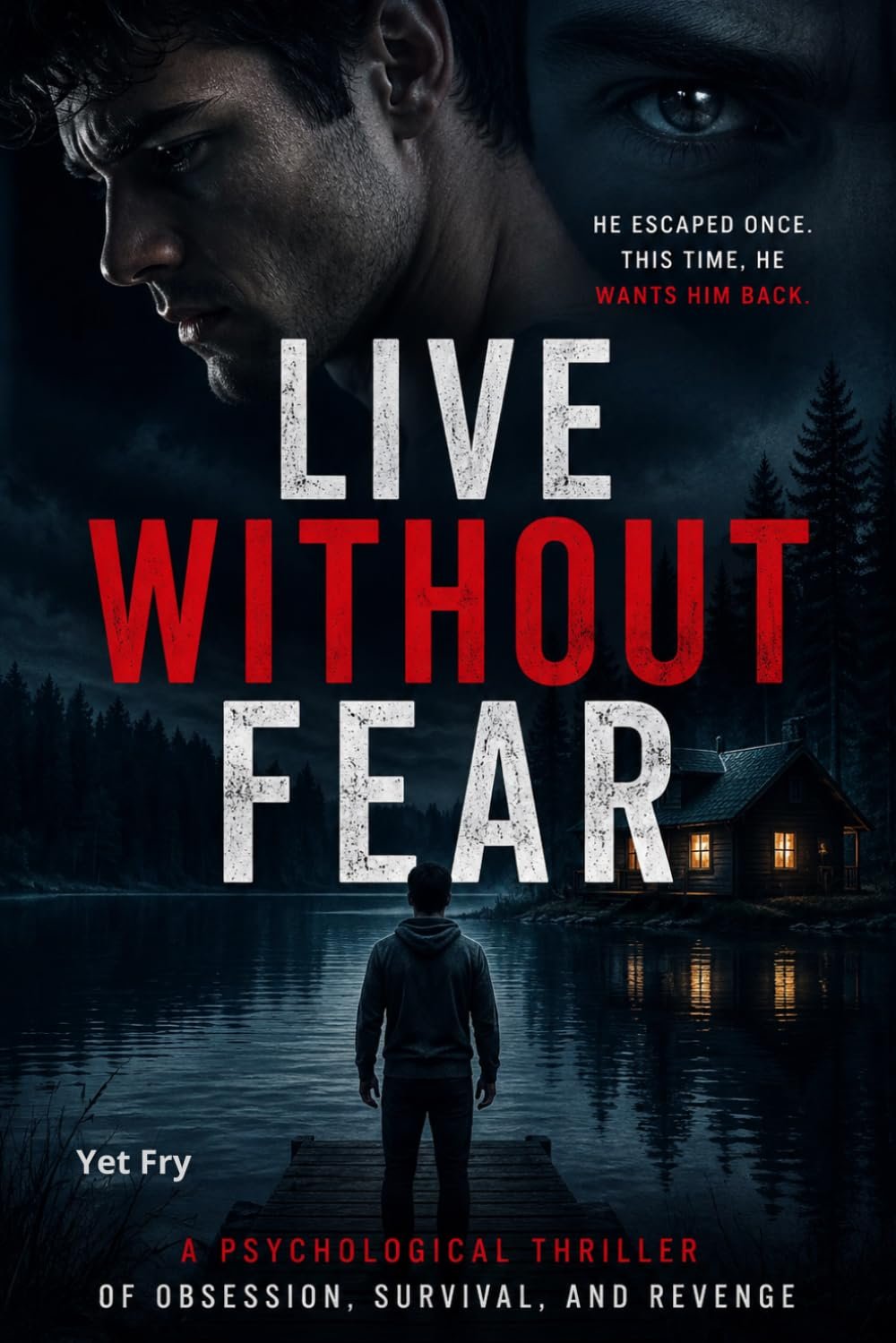
When Leaving Isn’t Enough: Why Live Without Fear Is the LGBTQ+ Thriller That Refuses to Look Away
What if escaping the person who hurt you was only the beginning of the danger? For too many LGBTQ+ survivors of intimate partner violence, that question isn’t hypothetical—it’s the quiet, relentless reality that follows them into every new apartment, every new relationship, and every hard-won moment of peace.
The Fear That Doesn’t End When You Walk Out the Door
There is a particular kind of terror survivors know but rarely speak aloud: the fear that leaving was not enough. You changed your number. You moved. You rebuilt, slowly and painfully, something that resembles a life. And still, somewhere in the back of your mind, you wait. Waiting for a message only you would understand. Waiting for the feeling of being watched to sharpen into something you can name. Waiting for the moment when the safety you built around yourself begins to crack.
For LGBTQ+ survivors, this fear is compounded by layers others may not fully see. Many have already lost family support—rejected by the people who were supposed to be their first line of protection. Abusers exploit that isolation with precision, systematically dismantling friendships and support networks until the survivor has no one left to call. When the relationship finally ends, the aftermath can feel impossible: no safety net, no community, and a psychological hold that doesn’t dissolve simply because physical distance exists. The shame is real. The self-blame is real. And the systems designed to help—police patrols, restraining orders, security cameras—often fail to address the most devastating dimension of abuse: the psychological terror of never truly feeling safe again.
A Story That Sees You
This is exactly why Live Without Fear exists. This dark, emotionally charged psychological thriller doesn’t flinch from the full weight of what survival costs—and what it takes to reclaim yourself from someone determined to erase you. What you’re about to discover in these pages will fundamentally change how you think about resilience, connection, and the courage it takes to rebuild when an obsession refuses to die.
Obsession, Survival, and the People Who Refuse to Leave
Live Without Fear follows Robbie, who believed he had survived Michael Ross. After years of manipulation, fear, and violence, Robbie has begun—carefully, tentatively—to rebuild. He has Kirk, a man whose steady, honest presence offers Robbie something he has never had before: the possibility of a future. But Michael’s obsession didn’t end when Robbie escaped. It evolved. And when Michael begins leaving signs meant only for Robbie—messages that only a survivor would recognize as threats—the fragile safety Robbie has built begins to unravel.
What makes this novel exceptional is its unflinching portrayal of how psychological abuse endures long after physical separation. Michael doesn’t need to be in the room to dominate Robbie’s thoughts. A calculated note, a presence felt rather than seen, a seed of doubt sown about whether Kirk’s love is real or merely pity—these are the weapons of a practiced predator. Live Without Fear captures, with painful accuracy, how an abuser’s voice can colonize a survivor’s mind, making every moment of happiness feel provisional, and every act of trust feel dangerous.
Kirk’s response to Robbie’s danger is equally compelling. Rather than standing helplessly by, he launches his own investigation—and uncovers a trail of broken victims stretching far beyond Robbie. What begins as love and determination becomes a profound moral reckoning: when legal systems cannot stop a predator who hides behind charm and false identities, what does justice require? The novel refuses easy answers, and that honesty is precisely what gives it power.
What This Book Understands About Healing
One of the most quietly devastating insights in Live Without Fear is that recovery from trauma is not a single dramatic moment. It is a series of small, hard-won victories—a physical therapy session completed, a meal eaten without fear, a rough sketch drawn on a cafeteria menu because the part of yourself that creates things has not been permanently destroyed, only buried. Robbie’s incremental return to his creative self is one of the novel’s most emotionally resonant threads. The abuser tried to suppress it. The survivor reclaims it—not all at once, not perfectly, but stubbornly, with humor and the steady presence of people who refuse to leave.
This is where Live Without Fear distinguishes itself from other psychological thrillers. It understands that healing through connection is not a passive process. Kirk’s consistent presence—honest, undemanding, grounded—is itself a form of healing. When Robbie whispers, “No one’s ever offered me a home,” the words carry the full weight of what isolation as a weapon does to a person. And when Robbie finally stands, paler than Michael has ever seen him, shadow-eyed but burning with something new, and says, “No, Michael. I didn’t come back. You came after me. It’s over, and you are going to pay for ALL the shit you’ve done”—it lands not as a dramatic plot beat but as the culmination of every small, painful act of reclamation that came before.
The novel also explores the found family that forms around Robbie and Kirk—a collective courage that demonstrates what individual fear cannot achieve alone. Abusers thrive in isolation. They lose power when survivors are surrounded by people who see clearly and act together. Live Without Fear makes this structural truth visceral and personal, showing how a chosen community becomes a survival structure when biological family has failed or been deliberately destroyed.
The Moral Questions That Stay With You
Perhaps the most enduring contribution of Live Without Fear is its willingness to sit with the moral complexity most thrillers avoid. What happens when you discover that the person hunting you has been doing it to others—and that the system has consistently failed to stop him? What do you owe those future victims? What does justice mean when law enforcement cannot provide it? Kirk’s declaration—“I don’t care what happens. As long as he never touches you again”—is not reckless. It is the honest voice of someone who has watched the system’s limits collide with a predator’s determination and has chosen which matters more.
These are not comfortable questions. They are the right ones. For LGBTQ+ readers who have navigated institutional indifference, family rejection, and the particular vulnerability of loving someone while being hunted, they will resonate with a recognition that is both painful and validating. This book does not promise that trauma will not define you. It argues, with evidence drawn from every page, that it need not define you forever—and that the people who stand beside you in the dark are not incidental to your survival. They are essential to it.
Begin the Journey Toward Reclaiming What Was Taken
If you have ever felt that escaping was supposed to be the end of the story—and discovered, with a sinking heart, that it was only the beginning—this novel was written for you. If you have ever loved someone who was being hunted, been the one hunted, or wondered whether the parts of yourself that were suppressed could ever return, this novel will meet you exactly where you are.
Don’t let another day pass with these questions alone. Start your journey toward understanding and recognition, and the fierce, stubborn hope that survival is only the beginning—not the ceiling. Get your copy at AMAZON to discover why Robbie’s story isn’t just a thriller. It’s a testament to every small act of reclamation that makes a life worth fighting for.
Enjoy LGBTQIA+ books, movies, and queer culture?
Join us on Social Media.
Facebook | BlueSky | Instagram | Threads | Printrest
#LiveWithoutFear #LGBTQThrillers #PsychologicalThriller #SurvivorStrength #LGBTQBooks #DomesticAbuseAwareness #HealingThroughConnection #FoundFamily #QueerFiction #SurvivalAndResilience